- Honouring Grandparents and the Elderly in a Changing World
Dear Brothers and Sisters in Christ,
The month of July brings with it a beautiful opportunity for reflection as the Universal Church celebrates the World Day for Grandparents and the Elderly. Instituted by Pope Francis and celebrated close to the memorial of Saints Joachim and Anne, the grandparents of Our Lord Jesus Christ, this annual observance invites us to rediscover the precious gift that older persons are to the Church, the family and society.
This celebration comes at a particularly significant time in our nation. Nigeria is a youthful country, full of energy, creativity and promise. Yet, amid our pursuit of progress and modernity, there is a growing danger of forgetting one of God’s greatest gifts to humanity: the wisdom of age. In many places, older persons are increasingly isolated, neglected, or viewed merely through the lens of their diminishing physical strength rather than the richness of their experience and wisdom. The World Day for Grandparents and the Elderly challenges us to reverse this trend and build a society where generations walk together in mutual respect and love.
The Scriptures consistently present old age not as a burden but as a blessing. The Psalmist proclaims: ‘They still bear fruit in old age; they are ever full of sap and green’ (Psalm 92:14). This beautiful image reminds us that usefulness in God’s Kingdom is determined not by age but by faithfulness. The elderly remain vital contributors to the life of the Church and society. Their prayers, sacrifices, counsel and witness continue to sustain families and communities in ways that often go unnoticed.
Throughout salvation history, God entrusted important missions to men and women advanced in years. Abraham and Sarah became instruments of God’s covenant in old age. Moses was called to lead God’s people when he was already advanced in years. Simeon and Anna, whose lives had been shaped by long years of waiting, recognised the Messiah when many younger and more powerful people could not. Their stories remind us that God’s purposes do not retire with age.
In our African culture, elders have traditionally occupied a place of honour. Across our various ethnic communities, age has long been associated with wisdom, experience and moral authority. The elderly served as custodians of communal memory, transmitters of values and guardians of tradition. The family compound was often a school of life where younger generations learned not only practical skills but also the virtues of respect, patience, resilience and faith.
Today, however, rapid urbanisation, economic pressures, migration and changing social structures have weakened many of these traditional bonds. Many elderly persons find themselves living alone. Some struggle with ill health, loneliness and financial insecurity. Others experience the pain of feeling forgotten by family members preoccupied with the demands of modern life. While technological advancements have connected people across continents, they have sometimes widened the distance between generations living under the same roof.
Pope Francis of blessed memory frequently warned against what he called the ‘throwaway culture’—a mentality that discards whatever is perceived as no longer useful. Sadly, this culture can influence how society treats older persons. When productivity becomes the sole measure of human worth, the elderly risk being marginalised. Yet the Christian vision of the human person offers a radically different perspective. Human dignity does not depend on youth, strength, wealth or social status. Every person remains precious in the eyes of God from conception to natural death.
The Fourth Commandment, ‘Honour your father and your mother’ (Exodus 20:12), is not merely a directive for children; it is a lifelong call to gratitude and responsibility. Honouring parents and grandparents means more than offering occasional greetings or gifts. It involves accompanying them with love, listening to their stories, seeking their wisdom, caring for their needs and ensuring that they never feel abandoned. In doing so, we fulfil not only a social obligation but also a sacred duty before God.
This year’s celebration invites families to examine how they relate to their elderly members. Do we make time to visit them? Do we listen attentively when they speak? Do we include them in family decisions and celebrations? Or have they become silent figures at the margins of family life? The quality of a society is often measured by how it treats its most vulnerable members. The elderly deserve not pity but respect; not token recognition but genuine inclusion.
At the same time, the Church recognises that older persons continue to have an important mission. The vocation of the elderly does not end with retirement from professional work; rather, it takes on new forms. They become witnesses to perseverance, reservoirs of wisdom and intercessors for the Church and the world. Many grandparents are among the first teachers of the faith to their grandchildren. They teach prayers, recount stories of God’s faithfulness and offer examples of steadfast commitment amid life’s challenges.
Saint Pope John Paul II wrote in his Letter to the Elderly (1999) that old age is ‘a favourable time for bringing to completion the human adventure.’ Rather than being merely a season of decline, it can become a privileged period of spiritual growth and deeper intimacy with God. Many elderly persons possess a serenity and perspective that younger generations can acquire only through years of experience. Their witness reminds us that life’s true value lies not in possessions or achievements but in relationships, faith and love.
The examples of Saints Joachim and Anne provide a powerful model for families today. Although Scripture tells us little about them directly, Christian tradition honours them as the grandparents who nurtured Mary, the Mother of God. Their lives remind us that the formation of future generations begins within the family. The faith that eventually enabled Mary to say ‘yes’ to God’s plan was cultivated in a family environment shaped by prayer, virtue and trust in God. In the same way, today’s grandparents continue to shape the future through the values they pass on to younger generations.
Our nation faces many challenges: economic hardship, insecurity, youth unemployment, corruption and social fragmentation. In addressing these difficulties, we need not only innovative solutions but also moral wisdom. The voices of experienced men and women who have witnessed both triumphs and trials can help guide society towards more humane and sustainable paths. Intergenerational dialogue is therefore not merely desirable; it is indispensable for national development.
To our young people, I make a special appeal. Take time to know your grandparents and elderly relatives. Ask them about their lives, their struggles, their journeys of faith and their hopes. Listen to their stories. In those conversations, you may discover treasures that no textbook, internet search or social media platform can provide. The wisdom accumulated over decades is a gift that should never be wasted.
To our elderly brothers and sisters, I express the Church’s profound gratitude. Your prayers strengthen us. Your sacrifices continue to bear fruit. Your faith inspires us. Even when physical limitations arise, your mission remains vital. The Church needs your witness, your wisdom and your intercession. Never underestimate the value of your presence within your families, parishes and communities.
As we celebrate this World Day for Grandparents and the Elderly, may every family become a place where generations encounter one another in love. May our parishes continue to create opportunities for the elderly to participate actively in the life of the Church. May our society reject every form of neglect and embrace a culture of care, gratitude and solidarity.
A people who do not care for their grandparents and fail to treat them with dignity have no future. The future is built not only by the dreams of the young but also by the wisdom of the old. When generations walk together, society flourishes, families are strengthened, and God’s Kingdom becomes more visible among us.
Through the intercession of Saints Joachim and Anne, may God bless all grandparents and elderly persons. May He grant them health, peace, joy and the assurance that they remain cherished members of God’s family. And may all of us learn to treasure the wisdom of years as we build the hope of tomorrow.
†Alfred Adewale Martins
Archbishop of the Metropolitan See of Lagos.
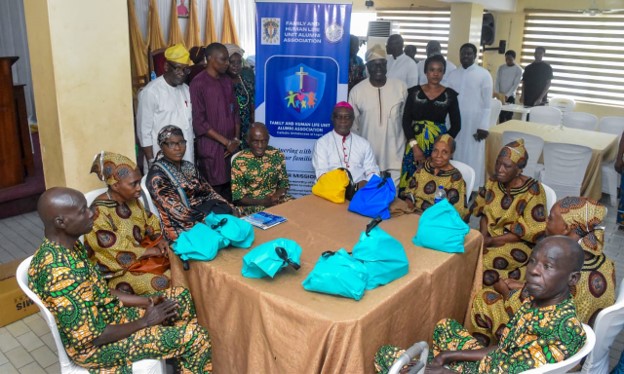
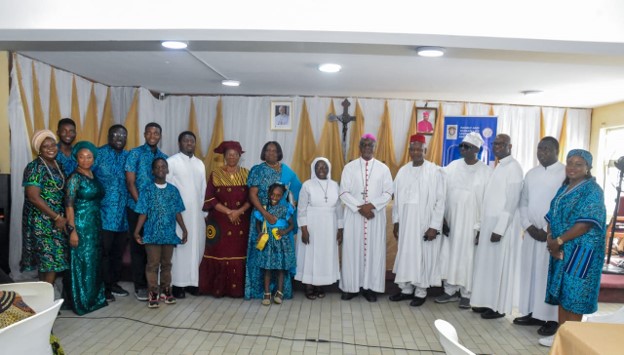
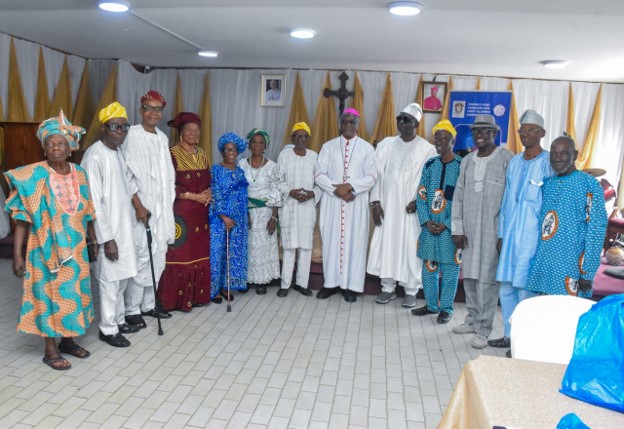
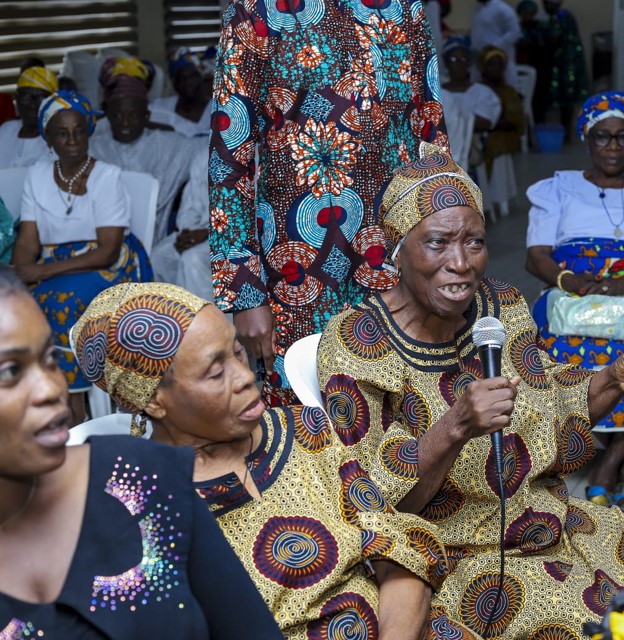
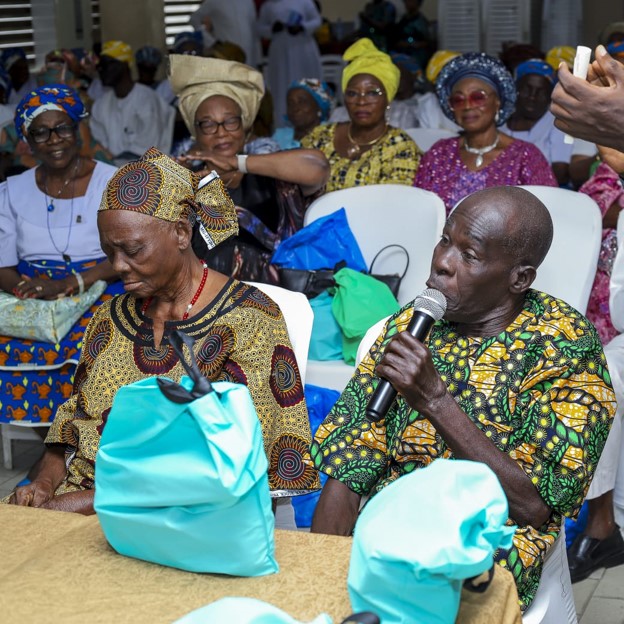
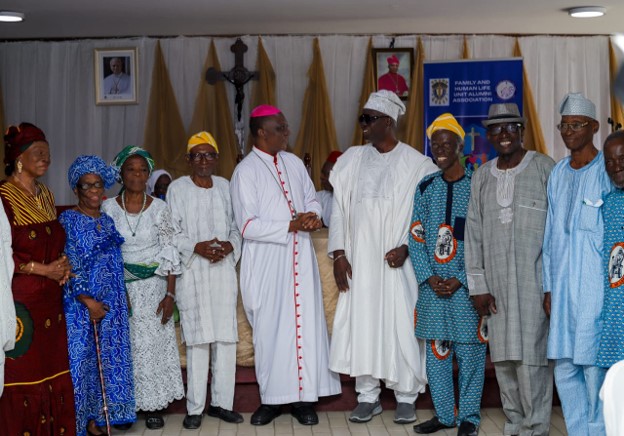
Moments from previous years: The Archbishop celebrating with the elderly